
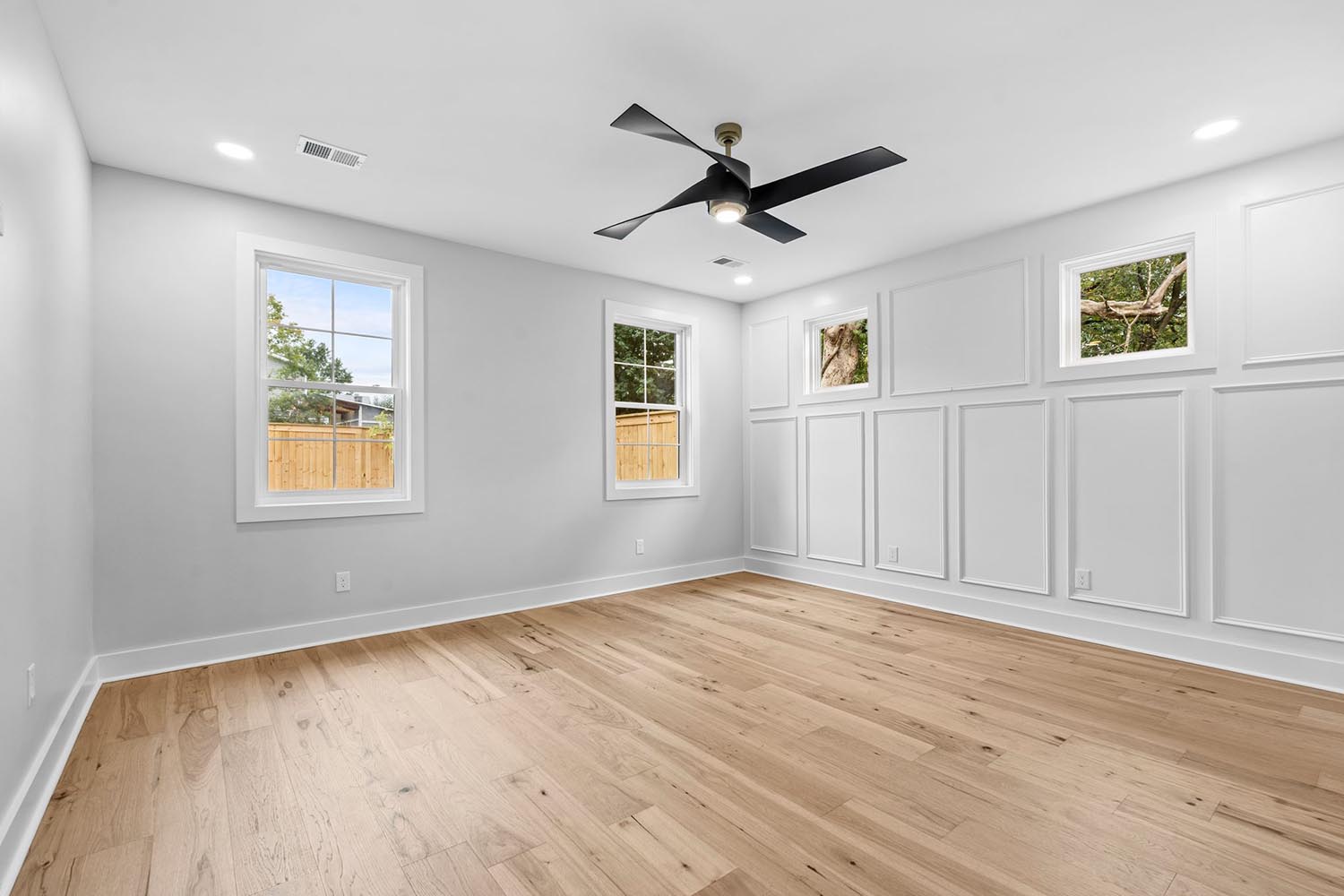
If several rooms no longer work, major systems are aging, and the layout does not fit the way you live, it is reasonable to ask: is a whole home renovation worth it? The answer depends less on a generic return-on-investment percentage and more on the condition of the property, how long you expect to stay, the amount of change needed, your budget, and whether the finished home can realistically meet your long-term needs.
A whole home renovation can solve problems that isolated room remodels cannot. It allows the kitchen, bathrooms, flooring, lighting, mechanical systems, storage, traffic flow, and overall design to be coordinated as one project. It can also be a major financial and logistical commitment.
Milam Homes provides full home renovations in Central Kentucky and serves communities including Lexington, Nicholasville, Georgetown, Versailles, Richmond, and Wilmore. Before deciding whether a large-scale remodel is right for your property, evaluate the following factors.
What Counts as a Whole-Home Renovation?
A whole-home project does not necessarily mean every wall is demolished. The scope can range from a coordinated update of most interior spaces to substantial structural reconfiguration.
A whole house remodel may include:
- kitchen remodeling;
- multiple bathrooms;
- flooring throughout;
- new lighting;
- wall removal or reconfiguration;
- electrical upgrades;
- plumbing changes;
- HVAC improvements;
- insulation;
- windows and doors;
- trim and millwork;
- built-in storage;
- primary-suite redesign;
- basement integration;
- exterior improvements.
The defining characteristic is that the project treats the home as a connected system rather than a collection of unrelated rooms.
When a Whole-Home Renovation Often Makes Sense
The Layout No Longer Fits Your Lifestyle
Older homes were often designed around smaller kitchens, more separated rooms, limited closets, and different expectations for family life.
If you repeatedly wish the kitchen connected better to living space, the primary suite had more privacy, or storage were distributed more logically, small cosmetic updates may not solve the underlying problem.
Multiple Rooms Need Work at the Same Time
If the kitchen, bathrooms, flooring, lighting, and mechanical systems all need significant improvement, completing the work as one coordinated project may reduce duplicated demolition and finish work.
For example, replacing flooring now and moving walls two years later could require portions of that new flooring to be removed.
You Like the Location but Not the House
Location can be difficult to replace. If you value the neighborhood, lot, schools, commute, mature landscaping, or proximity to family, renovating may allow you to keep those benefits while reshaping the home itself.
The Home Has Strong Structural or Architectural Potential
A well-built older home with good proportions, valuable materials, or architectural character can be a strong renovation candidate. The goal is not always to erase its age. Sometimes the best project modernizes function while preserving the features that make the house distinctive.
Whole-Home Renovation vs Moving
For many homeowners, the decision is ultimately renovation versus buying another house.
Compare more than sale price and construction cost.
Costs Associated With Moving
Moving can involve:
- real estate commissions;
- closing costs;
- inspections;
- repairs before selling;
- moving expenses;
- new furnishings;
- immediate updates to the next property;
- higher mortgage costs depending on rates;
- loss of a preferred location.
Costs Associated With Renovating
Renovation can involve:
- design and planning;
- permits;
- demolition;
- construction;
- temporary housing;
- storage;
- contingencies;
- upgraded materials;
- unexpected conditions in older homes.
Create realistic totals for both scenarios.
How Long Do You Plan to Stay?
A major renovation is easier to justify when the finished home will support your life for years.
If you expect to move soon, a very personalized full home remodeling project may not make sense. If you plan to remain for a decade or longer, daily improvements to layout, comfort, storage, and function may carry substantial personal value even when every dollar is not recovered at resale.
Think about future needs, including:
- children growing older;
- aging in place;
- working from home;
- multigenerational living;
- accessibility;
- hobbies;
- entertaining;
- storage;
- pets.
A renovation should solve tomorrow’s problems as well as today’s.
The Condition of Major Systems Matters
Cosmetic renovation can uncover aging infrastructure.
Before committing to finishes, assess:
- roof condition;
- foundation;
- drainage;
- electrical service and wiring;
- plumbing;
- HVAC;
- insulation;
- windows;
- structural framing.
When a house needs both cosmetic and system upgrades, a coordinated renovation can be an opportunity to address work behind the walls before installing new finishes.
Remodeling an Older Home Requires Extra Planning
Remodeling an older home can be rewarding, but it often requires more investigation than renovating newer construction.
Potential issues include:
- nonstandard framing;
- previous DIY alterations;
- outdated electrical systems;
- older plumbing;
- uneven floors;
- plaster;
- concealed water damage;
- structural modifications;
- lead or asbestos concerns;
- historic features worth preserving.
If the property has historic character, preservation principles can help guide decisions. The National Park Service’s Standards for Rehabilitation emphasize retaining character-defining features while allowing compatible alterations for continued use. Those standards do not govern every private remodel, but they are a useful reference for thinking about older buildings thoughtfully.
Decide Whether the Existing Footprint Can Work
A whole-home renovation can dramatically improve a house without adding square footage.
Reconfiguring underused rooms, widening openings, relocating a kitchen, improving storage, and rethinking circulation can sometimes solve the problem inside the existing footprint.
An addition may be justified when you genuinely need:
- another bedroom;
- larger primary suite;
- expanded kitchen;
- home office;
- mudroom;
- accessible first-floor living;
- family room.
Adding square footage increases cost and may trigger additional site, zoning, foundation, roofing, and exterior work. Do not add space simply because the existing layout is inefficient.
Create a Priority Hierarchy
A successful home renovation in Central Kentucky needs clear priorities.
Divide goals into three categories.
Must Have
Items necessary for safety, function, or the primary reason for renovating.
Should Have
Improvements that significantly improve daily life but can be adjusted if budget requires.
Nice to Have
Premium finishes, secondary features, or upgrades that can be removed without undermining the project.
This makes value-engineering decisions far easier during design.
Understand Why Whole-Home Budgets Change
Large renovations contain more variables than single-room projects.
Budget drivers include:
- structural changes;
- plumbing relocation;
- electrical upgrades;
- HVAC modifications;
- cabinetry;
- flooring;
- tile;
- windows;
- doors;
- appliances;
- fixtures;
- finish level;
- custom millwork;
- site conditions;
- hidden damage.
A contingency is especially important in older homes because some conditions cannot be confirmed until demolition begins.

Should You Renovate in Phases?
Phasing can reduce the immediate financial burden, but it can also add inefficiency.
Advantages of Phasing
- lower initial spending;
- ability to remain in part of the home;
- time to save for later work;
- easier decision-making in smaller scopes.
Disadvantages of Phasing
- repeated contractor mobilization;
- repeated dust and disruption;
- duplicated finish work;
- difficulty matching materials later;
- temporary transitions between old and new areas;
- potentially longer overall timeline.
If the projects are highly interconnected, one coordinated renovation may be cleaner.
Design Consistency Is a Major Benefit
One advantage of a whole-home project is the ability to create a consistent design language.
That does not mean every room must look identical. Instead, proportions, flooring, trim, hardware, lighting, colors, cabinetry, and materials can relate intentionally.
A coordinated plan can prevent the “remodeled one room at a time” look where each space reflects a different decade.
Think About Energy and Comfort
When walls are open, it may be practical to evaluate insulation, air sealing, HVAC distribution, windows, and other comfort-related systems.
Energy upgrades should be selected based on the specific building rather than generic assumptions. An energy audit or qualified professional can help identify where improvements may be worthwhile.
The U.S. Department of Energy provides homeowner guidance on energy efficiency through its Energy Saver resources. Use energy decisions as part of the total renovation plan rather than adding them randomly after finishes are selected.
Temporary Housing May Be Part of the Budget
A true whole-home renovation can make living in the house impractical.
Consider:
- whether the kitchen will be unavailable;
- how many bathrooms remain usable;
- dust and noise;
- children and pets;
- work-from-home needs;
- construction access;
- utility shutdowns.
Temporary housing can add cost but may also allow the project to progress more efficiently.
The Contractor Relationship Matters More on a Large Remodel
A whole-home renovation involves months of decisions and coordination.
Look for a team that can communicate clearly about:
- scope;
- design;
- allowances;
- selections;
- schedule;
- change orders;
- subcontractors;
- inspections;
- payment milestones;
- punch-list process.
The Kentucky Attorney General provides home repair and improvement guidance, including recommendations to obtain detailed written estimates and contracts and verify responsibilities before work begins.
Signs a Whole-Home Renovation May Not Be the Best Choice
Renovation is not always the correct answer.
Reconsider if:
- the location no longer works for your family;
- the lot cannot support the changes you need;
- the house has major structural problems beyond your appetite for risk;
- the desired project would significantly exceed what you are comfortable investing;
- you need substantially more space than the property can reasonably provide;
- the renovation would still leave major compromises.
Sometimes moving is the simpler path.
A Whole-Home Renovation Planning Sequence
A practical process looks like this:
- Document what is not working.
- Define long-term needs.
- Establish a realistic investment range.
- Evaluate the existing structure and systems.
- Develop a design that solves function first.
- Determine whether additions are truly necessary.
- Select finishes within the overall budget.
- Build a contingency.
- Review permit and construction logistics.
- Finalize scope before major work begins.
Rushing directly to cabinets, tile, and paint can create expensive redesign later.
FAQ
Is a whole home renovation worth it if I plan to stay long term?
It can be, especially if the location works well and the existing house can be redesigned to support your long-term needs. The value is not only resale. Better layout, storage, comfort, accessibility, and daily function can matter for years. Compare the renovation cost with the realistic cost and compromises of moving.
Is it cheaper to renovate a whole house at once or room by room?
It depends on the scope, but highly connected work can be more efficient when coordinated. One project may reduce repeated demolition, mobilization, flooring transitions, painting, and disruption. Phasing can still make sense for cash flow or livability. A contractor can help identify which tasks should be bundled and which can wait.
What should I renovate first in an older home?
Start with safety, structure, moisture, and major systems before cosmetic finishes. Foundation, roof, drainage, electrical, plumbing, HVAC, and hidden environmental issues can affect everything installed later. Once the underlying building is sound, focus on layout and then finishes. This sequence helps protect the investment in visible upgrades.
How much contingency should I plan for a whole-home renovation?
There is no universal percentage that fits every project. Older or heavily altered homes generally carry more uncertainty than newer, well-documented construction. Discuss contingency with your contractor and designer based on what is known about the property, how much demolition is planned, and which conditions remain concealed.
Should I move out during a whole house remodel?
For a substantial renovation, moving out can be safer and more practical, especially when kitchens, bathrooms, electrical systems, or major circulation areas are unavailable. Living on-site may be possible for phased projects. Discuss construction zones, utilities, dust control, pets, children, and work-from-home needs before deciding.
Can I keep the character of an older home while modernizing it?
Yes. Many successful renovations preserve distinctive trim, doors, masonry, proportions, flooring, or other character-defining features while updating kitchens, bathrooms, systems, and layouts. The key is identifying what gives the house its character before demolition and designing new work to complement rather than erase it.
What is the first step in planning a whole-home renovation in Central Kentucky?
Begin with a consultation focused on goals, property condition, budget, and long-term use. Before selecting finishes, determine whether the existing layout and systems can support the renovation. Milam Homes offers full-home renovation services across Central Kentucky and can help homeowners evaluate the project from planning through construction.
Talk With Milam Homes About a Full Home Renovation
So, is a whole home renovation worth it? It can be when you value the property and location, several parts of the house need coordinated improvement, and the finished design can support your life for years. It may not be the right move when the location, lot, structure, or investment level cannot meet your long-term goals.
Milam Homes provides full home renovations in Central Kentucky, including work for homeowners in Lexington, Nicholasville, Georgetown, Versailles, Richmond, Wilmore, and surrounding areas. To discuss your renovation goals, contact Milam Homes at (859) 535-8235.
